

When the bucolic beauty of upstate New York is interrupted by a cement guard tower right out of a James Cagney movie, it can be down right haunting.
Whether you are coming down the hill into Dannemora, riding down main street in Auburn or cruising up Route 4 outside Fort Ann, the reality of those prison walls is a reminder of the evil in the world.
We mostly don’t think about the life that goes on within those walls or what the inmates did to get there. And we probably don’t think about the men and women who work there either.
Until the state decides to close one.
Heading east on Route 22, the Great Meadow Correctional Facility is a sprawling complex that once housed some 1,500 of the worst our society has to offer.
That numbers has dwindled to nearly 500 these days with some 700 employed there.
Those numbers don’t work in any business.
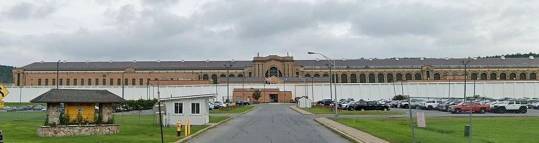
It was all part of budding network of prisons built over the years in rural upstate communities with little else going for them.
But what the state giveth, it can also taketh away.
New York State announced this month the Great Meadow Correctional Facility would be closing this fall.
That comes with outrage in some corners for the families who will be uprooted and the economic hit delivered to a county that is always looking for more jobs.
But the closing certainly makes sense. With crime trending down for decades, New York has regularly scrapped prison complexes across the state.
Mount McGregor in Wilton closed 10 years ago.
Moriah Shock was shut down two years ago.
You’d think the closing of a prison would be a good thing for the people in this state. Less crime means fewer criminals and safer communities.
But places like Great Meadow have provided well-paying jobs for more than a century. I suspect most of us would not want our children to work in a prison and finding people to do those jobs has become more and more difficult in recent years.
The conditions can be abominable, not only for those incarcerated, but for those who work there.
Studies have shown prison employees often have higher incidence of substance abuse, suicide and domestic violence. Those well-paying jobs with all that overtime come with strings attached.
The reality is we don’t know the half of what life is like inside those walls. Newspapers rarely cover them and the Department of Corrections is difficult to get information from.
Three years ago an online, nonprofit news organization called New York Focus called Great Meadow “The worst prison in New York State.”
It said it was worse than the notorious New York City jail Rikers Island.
That should get your attention.
According to New York Focus, Great Meadow had the highest rate of inmate suicides and the highest rate of recorded staff violence.
New York Focus was establish in 2020 by a group of young journalists intent on covering state government, including prisons. The New York Times did a story on its efforts.
In its story on Great Meadow in November 2001, New York Focus wrote:
“In recent months, according to incarcerated people and staff of watchdog groups who visited the prison, the prison has seen near-daily assaults on incarcerated people by staff, little protection against extreme heat, and ongoing medical neglect. When incarcerated people do report these abuses, their grievances are rarely acted upon, multiple incarcerated people and their family members told New York Focus and The Nation. Many stay silent for fear of retaliation.
“I will put it to you like this,” Gerard Bastien, currently incarcerated at Great Meadow, told New York Focus and The Nation. “You see how police are killing people outside and get away with it? It’s the same thing in here, but worse.”
That’s a pretty shocking account about a local institution.
Yet, local Assemblyman Matt Siimpson said closing the prison was “unwise” and state Sen. Dan Stec posted on his official state Senate webpage: “Don’t Close Great Meadow.”
Both are obviously more concerned about the economic impact than what is going on inside those walls.
The New York Focus article used sources you rarely see in prison stories – the prisoners themselves.
They repeatedly made accusations of beatings and assaults.
One of the big issues at Great Meadow was that over 40 percent of the prison population was on the prison’s mental health caseload. It appears Great Meadow has become a dumping ground for mental health cases.
In 2019, a 67-year-old inmate who struggled with anxiety, schizophrenia, epilepsy and substance abuse died of a heart attack. But several inmates told investigations the inmate had been severely beaten by guards two hours before his death. Concerns were raised that employees were not getting the enough training.
Between 2017 and 2019, the prison issued 245 violations for assault on staff by inmates. That was the highest number among the state’s 52 prisons.
“I don’t think that’s a naturally occurring phenomenon,” said Jennifer Scaife, the executive director of the Correctional Association of New York to New York Focus. “There are certain conditions created at that prison due to its punitive culture, paramilitary organization of the security staff and the relative lack of opportunities for programs, recreation and other positive activities.”
New York Focus pointed out that despite the high rates of staff violence, Great Meadow had the second fewest number of grievances about staff misconduct in 2019.
Many inmates told the news organization their grievances were not recorded. The reporting makes you wonder if there has been an institutional failure and if it has been addressed.
The announcement of Great Meadow’s closing came suddenly and without much of a plan on how to use the infrastructure in the future. The state does not have a good track record in this regard.
When Mount McGregor closed a decade ago, there was talk of reusing the property as a location for prison movies, then possibly a resort to take advantage of the view, but nothing has come to pass, although the Grant Cottage historic site has benefitted by acquiring some land to expand its operation.
Ultimately, having fewer prisons is a good thing, especially if that prison is dysfunctional.
Closing Great Meadow is an opportunity for Washington County and the state should absolutely help in that regard.
But ultimately, maybe returning the prison to its previous incarnation – a great meadow – is for the best.

Olympic accomplishment
Tim Reynolds, a former Post-Star sportswriter who now writes for the Associated Press, is again covering the Olympics.
As a high school kid who grew up in Indian Lake, Tim managed to talk his way into part-time sportswriter gig in the 1990s. We couldn’t get him to leave. He had talent and ambition and when we insisted he go back to college to finish his degree, well, it didn’t last long.
Tim eventually landed at The Associated Press and he was the first person I saw when I arrived at the media center to cover the Winter Olympics in Salt Lake City in 2002.
Tim has since covered multiple Olympics – in addition to his NBA beat gig – and I’m sure he will be in the middle of any major story that breaks in Paris.
Special thank you to journalists, Ken Tingley and Will Doolittle, for allowing The Adirondack Almanack to share content from their online newsletter with our readers.
About them: Two retired North Country journalists continue to lend their voices to the issues and debates of our time. Ken Tingley, editor of The Post-Star in Glens Falls for 21 years, and Will Doolittle, who spent time at the Adirondack Daily Enterprise and Malone Telegram before landing at The Post-Star for 30 years, have joined forces to produce a newsletter on Substack covering local news four times week. Substack is an online newsletter that is delivered by email to each subscriber.
Tingley and Doolittle, both award-winning columnists during their careers, continue to weigh in and add contest to North Country issues, including the actions of Rep. Elise Stefanik. Tingley produces columns every Monday, Wednesday and Friday while Doolittle writes a Sunday column. While the newsletter is free to all subscribers, readers may support the work by buying a paid subscription.
To subscribe, you just need to insert an email address and you will automatically receive the content. To subscribe for free or make a paid contribution, click here. To review some of the past columns, click here.
We all can sympathize with losing your livelihood. That’s a gut punch for anyone. But government’s purpose is to provide essential public services, not to guarantee high paying employment with generous benefits for all. Politicians who secure their own reelection to lucrative offices by ‘bringing home the bacon’ are the reason the country runs huge budget deficits and New York State taxes are driving people and business out. Our area and elected officials are usually labeled ‘conservative’ and against wasteful government spending. But apparently that’s only when the spending is in someone else’s district. Such embarrassing hypocrisy. Maybe Great Meadows could be turned into a rehab facility for politicians without principals.
Makes you wonder why the State would spend 54 million dollars the past 5 years on a place they planned on closing. I myself would not believe everything these inmates say. Mr Tingley seems to believe every word. Remember our prisons were emptied with NYS new laws, watching the news every day, I myself don’t see any decreases in crime, just a decrease in people being held accountable.
I did not say I believe every word, but when the reporting comes from a credible news source it means it believes the source.
One other clarification, there has been much written about the bail reform laws which were written so that those accused of minor misdemeanor crimes did not end up spending months in places like Rikers Island because they did not have legal representation. Saying that the prisons were “emptied out” is not accurate. Crime has been going down across the country for decades. Ultimately, fewer crimes means fewer inmates. The bail reform was also changed to address its weaknesses.
As far as crime, here in Glens Falls I do not see any changes in the crime reported and I certainly would not fear walking anywhere at anytime in Glens Falls.
Finally, from years of watching the “If it bleeds it leads” local television stations in Albany, you would think there is an epidemic of crime. The reality is that crime has been going down there and Albany is one of the few places in the state that has been gaining population.
How many inmates were incarcerated in 2017? A: 51,466
How many inmates are incarcerated as of January 1, 2024? A: 32,750
How would you describe this; if not “emptied out?”
New York State has released at least 41 cop killers since 2017. I wonder what (if any) criteria needs to be met for the parole board to approve? Should I be surprised New York State even had a parole board appointee that was married to a murderer?
The recent changes in discovery reform has also led to a decrease in individuals being prosecuted. These changes didn’t make life easier for the prosecutors. It created unnecessary paperwork and other ridiculous requirements. The changes require the prosecutors to turn over certain materials to the perpetrator (including information of the victim.) If I am assaulted by a much bigger, faster, and stronger individual that has already shown the ability to be violent would I really want them to know where I live?
Crime is only calculated if reported. We honestly don’t have a clear idea what the actual crime rate is. Only 141 out of 583 law enforcement agencies in New York successfully submitted data to the FBI through the National Incident-Based Reporting System in 2022.
It’s blatantly clear to anyone with an eye open that New York State has embraced the “hug a thug” mentality. They’ve even proposed programs that would pay gang members not to commit crime. Let that sink in.
No decrease in crime? When I visited my middle sister in the early 90s down in Nu Yawk City, they were averaging two thousands murders a year during the crack epidemic. Now with a million more people, NYC averages 500 a year.
A lot of the thanks for that must go to Rudy Giuliani when he was elected mayor in 1994.
New York City is Disneyland these days compared to the 1970s.
Agreed, Ken, but we’re not comparing crime now to the 70’s and 80’s. Like I said, thanks to Rudy in the 90’s, crime came way down to a new, lower, ‘normal’. THAT level is what we’re talking about going up now.
Well, I don’t see it in my neighborhood. As I understand the statistics, there was an uptick of crime during the pandemic, but it is going back down now. Obviously, every region is different, but that is how I understand the numbers. So even with the small uptick during the pandemic, it was not a huge issue.
Most authors on this site just write their articles and then sit back and let their readers comment and take the subject narrative wherever they will. Oh, there’s an occasional ‘thank you’ or something like that, but mostly it’s us readers that do the commenting after the article is written. You don’t like to do that, do you? You like to ‘answer’ many of the readers’ comments, usually to refute what that reader wrote. To me, that’s kind of disrupting to the ‘flow’ of our ideas and not how this format should work. Just a comment Ken.
I believe it is appropriate to respond to inquiries by readers or to respond to misinformation. If someone says my information is incorrect then that is questioning my reporting and reputation so I think I should address that. I certainly try to do that with a civil tone. If someone says I have an “agenda” – whatever that means – then I think it is fair to ask them what my agenda is. I’ve been very impressed with the level of debate on the Adirondack Almanack site and happy to be part of it.
It just seems to me that you’re hyper-sensitive to your readers’ comments. Not sure why that would be, but hey, it is what it is. I guess we’ll just have to agree to disagree.
And one could say that the commenters here who criticize Tingley’s commentary are hypersensitive to the content of the Adirondack Almanack. I guess where you stand depends on where you sit.
I suppose one could say that Bob, but in this case I was pointing out that the moderator (author) of a subject, would have a better overall discussion by introducing the subject (including his opinion of things) to his audience and then sit back and see where his audience takes it. The discussion is much more free flowing like that, don’t you think? Anyway, that’s where I sit.
JohnL wrote: “The discussion is much more free flowing like that, don’t you think?”
I don’t see any basis for the conclusion that the discussion is more “free flowing” when the author “sits back.” And in your reply, you don’t offer any basis for that conclusion, just your assertion. To me, when an author replies to comments, it provides additional information as to his or her views, and provides an added insight as to the content of the original commentary. I think that’s of value.
Nice chatting with you Bob!
Always good to have a free flowing discussion. 😉
Another biased article from half of the duo that ruined the once respectable Glens Falls Post Star. He is notorious for half reporting on issues to push his agenda.
I was a newspaper journalist at small community newspapers for over 40 years. We were chosen newspaper of the year nine times while I was editors and Mark Mahoney won the won the Pulitzer Prize in 2009. So I’m curious what my agenda was all those years other than making our community a better place to live.
If you don’t like the message, attack the messenger… Let’s see some facts refuting the reporting instead.
50 years ago I lived in South Glens Falls, getting haircuts at my mom’s hairdresser’s home salon. She had a teenage daughter and a Great Meadow guard husband. Divorced him. “He treats me just like them”.
It is without a doubt a very difficult job and there have been many studies that show that corrections officers have a much higher incidence of substance abuse, domestic violence, etc…
Maybe Great Meadows could be turned into a holding facility for the “Criminals” who are crossing our borders illegally on a daily basis…
And then what??
Keep them there until they are sent back to there country of origin
Maybe Schermerhorn could use it for apartments?…..Or even Sonny B could get the job done…Or…weed factory…the inmates could work for weed…and save even more tax dollars. Also they can open it up to Ghost tours and what not…Thank You Ken…
With 500 employees for 700 prisoners, there’s no way this made sense to keep operating. People complain about taxes in NY know this is part of the story. It’s takes guts to close down these places because of the hurt the action causes. But it is simply unaffordable. Yes, it means fewer NYS employees.
Crime is down. Marijuana is legal. The spending on stuff that used to be needed has to stop.
You are probably in favor of our tax dollars being used to house, clothe, feed, pay medical and cell phones for immigrants though. That needs to stop also. I’d rather pay taxes to keep this and other prisons open than support immigrants.
Not covered in this article but would like to know …
1.what happens to the 500 inmates?
2.how many of the employees can transfer to other correctional facilities and which ones?
3.what is the plan for this facility after closure? i.e. repurpose, knock down,???
This article paints the guards and workers as evil. You are housing violent people in these prisons who did bad things. These officers risk their own lives so the rest of us don’t have to worry. Lots of inmates are violent, so you can’t expect that there won’t be violence. Usually, it’s the leadership that sets the tone much higher up. The guards also have to protect themselves. This article is a horrible depiction of officers and the author should be ashamed.
We should come up with better ways to house violent criminals, I agree, but don’t throw the guys under the bus that are doing a job to keep everyone else safe. Also, why did we close Shock in Moriah. That was a tried and true program that was positive. That alone proves these moves are political. Tingles- how about an article on how Moriah Shock was beneficial for the inmates AND the communities. Because that’s the truth.
Lastly, there are lots of prisons downstate, that’s where we should close prisons. Western NY will remain untouched because hochul is beholden to her western roots. She could care less what northern NY looks like. The fact is that northern NY is actually the best place for prisons in the state.
Where in the article does it say the workers are evil? That is a total mischracterizatron. You have politicians bragging that this is a prison that changes lives, but you have other reporting that says it is the worst prison in the state. You need to report both those fact to have a better understanding of the issue and whether that was part of the equation of why it closed.