
With the new year upon us here are a few of the big things I’ll be keeping an eye on this year.
- Salt: Road salt pollution continues to be a major threat to the park, but I hope there is more focus on solutions this year. State officials are promising a report from the Adirondack Road Salt Reduction Task Force will drop early this year. The report will be revealing, but it will be even more important to track the progress of pilot programs and monitor whether the state is making good on the task force’s recommendations. I also want to learn more about the role the state’s large salt industry plays in both the current use and potential reduction of road salt. I noticed the governor recently signed a law promoting the purchase of domestic salt.
- Study the Lakes: There are two disparate issues that center on one key topic: more closely examining Adirondack lakes. Scientists and other Adirondack advocates are organizing a survey of hundreds of Adirondack lakes, focusing on the impacts of climate change and other risks to water quality. The advocacy campaign in Albany will ramp up this winter, because if lawmakers boost funding for the survey project scientists say they could start sampling lakes this year. Separately, a court decision expected in the coming months could clarify the state’s responsibility to examine the “carrying capacity” of lakes, particularly in the context of proposed development. Though that decision could be appealed. Will the state make any progress this year in implementing a longstanding goal of the State Land Master Plan?
- HABs: Plenty of ink has been spilled about potentially-toxic harmful algal blooms made of cyanobacteria, but I want to dig more deeply into the evolving science of what’s behind the blooms and better parse the health and safety risks that lie behind the “harmful” in HABs.
- Money, Money, Money: The old journalism adage of “follow the money” will be an important watchword as we monitor how state, federal and local agencies are spending down an enormous influx of infrastructure and environmental funding. We’ve already started to see the first grants with new federal infrastructure money, and New York voters recently approved $4.2 billion in borrowing to fund environmental projects, infrastructure upgrades and land acquisition. The money could be transformative but will it be?
Let me know what you will be watching for this year or any suggestions/tips for peeling back the layers on these perennial issues. I can check back on progress on this list in December.
PS: One 2023 resolution I have: Go fishing!
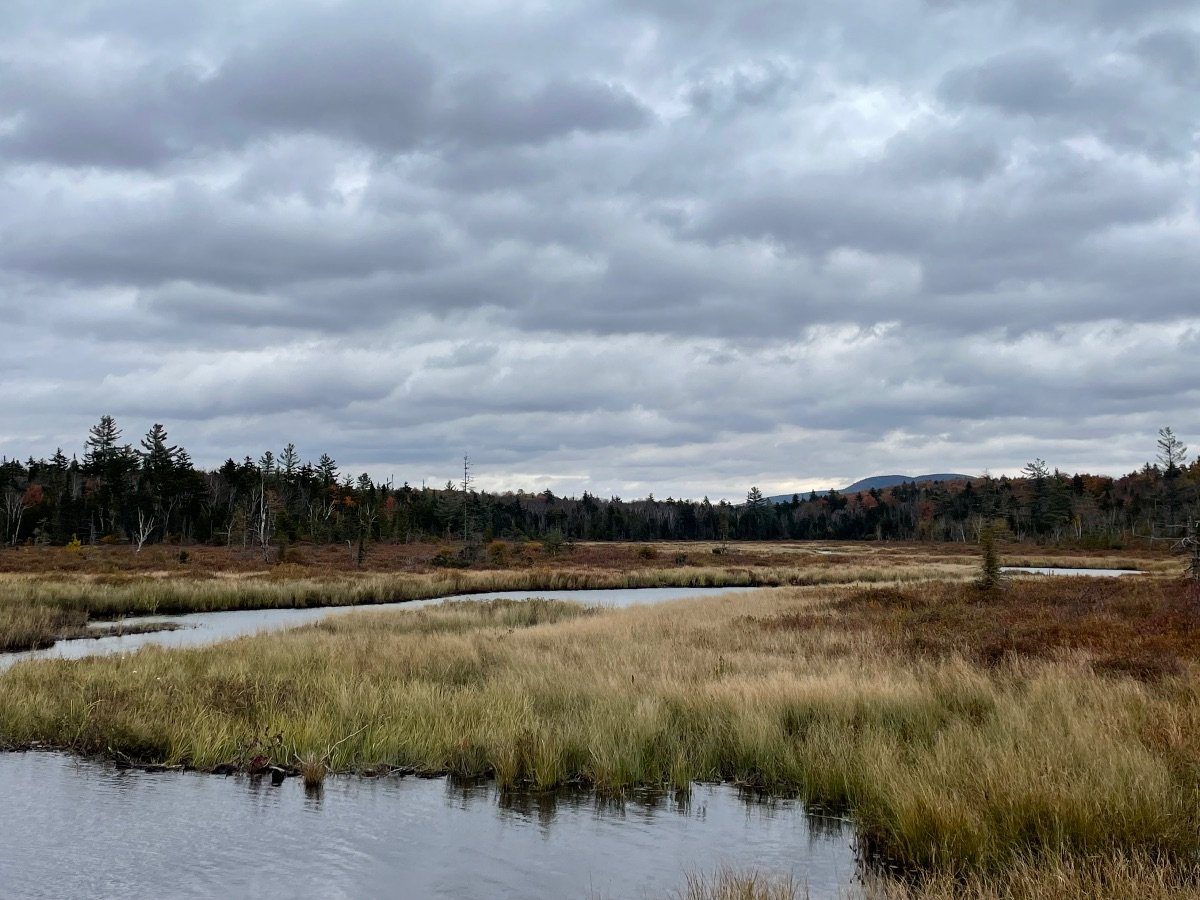
Photo at top: West Canada Lake Wilderness in October. Photo by Zachary Matson
This first appeared in Zach’s weekly “Adirondack Report” newsletter. Click here to sign up.
I agree with your ‘watch’ list. I think a couple other topics to watch are the rollout of mandatory septic inspections in the Lake George basin. This could be a model for other Adirondack lakes.
Another topic is the use of the chemical ProcellaCOR at test sites in Lake George. As you know, the LGPC was blocked last year by the court from putting this into Lake George. It’s pretty certain that the Park Commission will apply for a new permit in 2023. I’d love to see some investigation into how ProcellaCOR is working in lakes where it was applied three years ago or more since ProcellaCOR is guaranteed as working for three years/seasons. See https://sepro.com/aquatics/procellacor-ec-landing-page. Since ProcellaCOR was only approved by the EPA in 2017/2018 and in NY State in 2019, now would be the time to seek data on milfoil growth after three years.
It is also concerning that the manufacturer indicates the plants could become resistant to the chemical. The product label states: “Weed populations may contain or develop biotypes that are resistant to ProcellaCOR EC and other Group 4 herbicides. If herbicides with the same mode of action are used repeatedly at the same site, resistant biotypes may eventually dominate the weed population and may not be controlled by these products.” See p 1 at See p. 1 of product label at https://sepro.com/Documents/ProcellaCOR_EC–Label.pdf.
I should note that a petition launched in the spring of 2022 asking the LGPC to hold off on using ProcellaCOR in Lake George now has 4,565 signatures.
Was the photo from the bridge outlet of South Lake.
I can’t remember exactly, but I think it was from that part of the loop. Some very wet trail sections in that area, including one that had me venting to the dog for the next mile
A good reference is Cyanobacterial blooms by Huisman, J. et al in Nature Reviews Microbiology, Vol 16, August 2018, pp. 471-483. “This Review presents
a concise assessment of available evidence for the global expansion of blooms, the traits and mechanisms underlying bloom formation, the toxins produced by
cyanobacteria, their interactions with other species, the presumed environmental drivers of bloom development and possible measures to prevent and control cyanobacterial blooms.”
RDL
One additional issue that is percolating (in which I’m involved) is determining the extent of PFAS contamination in surface and drinking water. These ‘forever chemicals’ were added to the State’s list of toxins in ‘21. DEC is already six months late in issuing surface water limits (as mandated by law).
We know that fire fighting foam (AFF) use has contaminated land and water around the Lake Clear airport in Harrietstown, the Salmon River near Plattsburgh’s former AFB, and Camp Drum.
We also know that DEC and DOH have caused significant additional testing, but they continue to remain opaque about the results. For example, New York is one a very few blue states that does not share test data with the EPA, so most NY data is not included in the national PFAS database, at ECHO.epa.gov
If you want to be involved in testing for PFAS of surface or drinking water in the St. Regis, Salmon, Chateaugay, or Saranac river watersheds, please contact me.