
 It was the first time Grant had battled Lee. The two armies blundered into each other in deep woods just west of Fredericksburg, Virginia in early May of 1864. It would be known as the battle of the Wilderness. Grant’s Federal forces totaled over 101,000 to Confederate General Lee’s 61,000. Fighting in the deep woods with their opposition obscured by acrid black powder smoke, the casualties were horrendous.
Only by the flash of the volleys of the forming line could they know their enemy. The woods lit up with flashes of musketry and according to one observer, the incessant roar of the volleys sounded like the crashing of thunderbolts. Brave men tumbled to the ground like autumn leaves in a windstorm. Through all this the 93rd New York continued to advance over a mile through a tangled forest, underbrush, and swamps – all while facing rifle and artillery fire.
Adding to the horror was that the woods caught fire. It had not rained for weeks and the explosions of the battle set the dry undergrowth on fire. Wounded men, unable to escape, were burned alive. Those that escaped the fires were placed at quickly established aid stations. Some recovered; many did not.
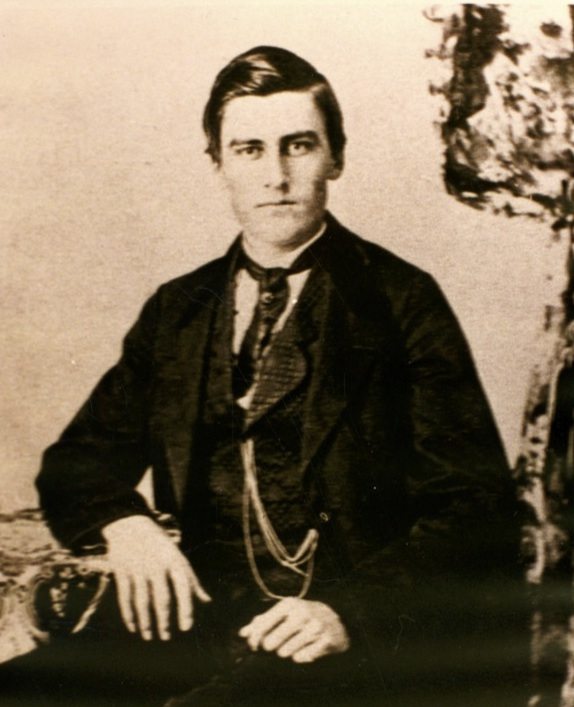 Among those killed on May 6th, the third day of the battle, was Private Jabey Eldridge of Johnsburg. It was Jabey’s first battle with the 93rd. Jabey, 5 foot 9 with hazel eyes. Jabey who had signed on with 93rd after recovering from wounds suffered serving with the 22nd at the Battle of Fredericksburg two years earlier.
Four officers of the 93rd were killed at the Battle of the Wilderness; Captain Barnes (of Schroon Lake), Captain Bailey and Lieutenant Gray and Jabey’s older brother, Lieutenant Norman Fox Eldridge.
Norman had originally enlisted with the 93rd NY Volunteer Infantry, on Nov 1, 1861. Within a year he had made 1st Sergeant and within two years of his enlistment was a 2nd lieutenant. As the black powder smoke cleared through the woods that 6th day of May, 1864, Lt. Norman Fox Eldridge lay dead.
These two brothers had been killed in combat on the same day and on same battlefield.
They were not alone. Many sons, brothers and husbands were killed that day. Over 17,000 Federals were killed or wounded over those three days in early May 1864 and over 11,000 Confederates met a similar fate.
 Nathan and Electa Eldridge had a third son serving in the Federal Army at the time, also with the 93rd NY. On hearing of the deaths of their sons Jabey and Norman, they must surely have worried even more about their son Nathan. Nathan had enlisted in January of 1864; just five months before his older brothers would lay dead in the dark tangle woods of the Wilderness. We do not know what Nathan thought about losing his two brothers that day, but just three months after the Battle of the Wilderness, Nathan himself was captured at the Battle of Deep Bottom near Richmond and sent on to a confederate prisoner of war camp in Salisbury, NC.
1864 was a tough year for the Eldridge family.
This essay is drawn from Glenn Pearsall’s presentation “Johnsburg Goes to War” held September 11, 2001 at the Tannery Pond Community Center, North Creek, N.Y.
Illustrations, from above: “Army of the Potomac – our Wounded escaping the Fires of the Wilderness” by Alfred R. Waud which appeared in Harper’s Weekly on June 4, 1864; Jabez Eldridge; and Norman Eldrige (courtesy of the Johnsburg Historical Society).
It’s great to have a glimpse into how local people contributed to the civil war. Thanks for bringing this to our attention.
Hope you are working on a larger work on Adirondackers in the Civil War.